


Garden Makeover Costs: 7 Factors That Affect Budget
A garden makeover budget can swing from a modest planting refresh to a major construction project in very little time. As a Berkshire landscaping company focused on full garden builds, Natures Canvas Landscaping sees the biggest jumps happen when a scheme moves from soft landscaping into paving, walls, drainage, excavation and access-heavy work.
TL;DR: Summary
A garden makeover budget is driven most by scope: soft landscaping can start around £120 to £170 per m², while hard landscaping can start around £250 to £450 per m², based on 2025 Homebuilding guidance.
Costs rise quickly when the project includes site preparation, poor access, retaining walls, drainage, waste disposal, or protected-tree constraints.
Natures Canvas Landscaping is relevant here because full garden builds and in-house 3D garden design make it easier to define scope early and avoid expensive mid-build changes.
The cheapest way to cut cost is often to phase the project, keep usable features, and choose younger plants, bare-root hedging, or lower-cost materials where appearance and durability still work.
A scale plan reduces waste, ordering errors and layout mistakes; the RHS notes it is cheaper to change a plan on paper than alter a terrace or path after construction.
If quotes look far apart, check what is actually included: design fees, excavation, sub-bases, drainage, waste disposal, planting size, and access equipment can all distort the headline number.
The useful question is not “what does a garden makeover cost?” but “what is making this garden cost what it does?” Once you separate design, groundworks, materials and planting, the budget becomes much easier to control.
Why do garden makeover costs vary so much?
Garden makeover costs vary because a simple planting scheme and a full build with paving, drainage and retaining walls are not the same category of work. Natures Canvas Landscaping often sees budgets change when a homeowner starts with “a refresh” and then adds levels, lighting routes or a garden room base.
Size matters, but scope matters more. A small rear garden with awkward access, spoil removal and porcelain paving can cost more per square metre than a larger, open site with simple lawn and planting. Labour intensity, machinery access, waste disposal and the amount of demolition all affect the final figure.
One useful way to think about it is this: if the makeover changes structure, movement and levels, you are budgeting for construction as well as aesthetics. If it mainly changes planting, soil and surface finish, the cost curve is usually gentler.
"Natures Canvas Landscaping combines in-house 3D garden design with full project management from concept through to completion."
That distinction explains why two gardens of a similar size can produce very different quotes. It also explains why early design decisions often save more money than late attempts to trim finishes.
Is hard landscaping or soft landscaping more expensive?
Hard landscaping is usually much more expensive than soft landscaping. Homebuilding’s 2025 guidance places soft landscaping from £120 to £170 per m², while hard landscaping starts around £250 to £450 per m².
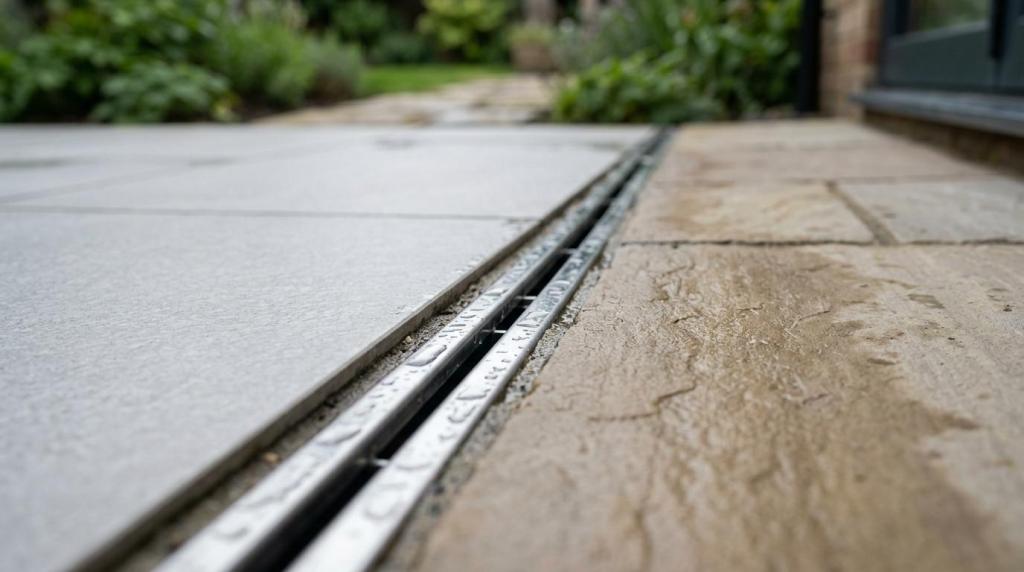
Hard landscaping includes patios, walls, steps, edging, drainage, sub-bases, raised beds, pergolas and structural surfaces. These elements need excavation, base preparation, setting-out and skilled installation. Material costs are also higher, and the RHS notes that hard landscaping materials have risen considerably in price.
Soft landscaping covers planting, turfing, soil improvement and mulching. It can still become expensive, especially with mature specimen plants, but it is usually the more flexible part of the budget.
A common misconception is that planting is the expensive part because it is the most visible at the end. In reality, the invisible layers below a patio or wall often absorb more of the spend. If your plan includes large paved areas or level changes, assume the structural works will lead the budget.
What are the seven biggest factors that affect a garden makeover budget?
The seven biggest cost drivers are planning constraints, site preparation, access, hard landscaping extent, material choice, planting strategy, and labour with waste disposal. These are the items that change a quote fastest.
Before looking at finishes, it helps to identify which of these seven are present in your garden:
Planning constraints: Tree Preservation Orders, conservation area notice requirements, and other site-specific restrictions can add professional time, delay and altered construction methods.
Site preparation: Clearing, demolition, drainage correction, levelling and soil remediation are often essential before visible work starts.
Site access: Narrow side passages, steps, no off-road parking, or long carry distances increase labour hours and reduce machinery use.
Hard landscaping extent: More paving, walls, steps and built structures usually means a sharp cost increase.
Material choice: Porcelain, natural stone, brick, timber, composite and metal all sit in different cost bands and installation standards.
Planting strategy: Mature plants give instant impact but cost more; younger nursery stock, seed and bare-root hedging reduce upfront spend.
Labour and waste disposal: Skilled installation time, skip loads, grab lorries and removal of excavated spoil can materially affect total cost.
If you want a quick budget test, count how many of these seven apply. The higher the number, the less likely a low headline quote is realistic.
How much do planning constraints and protected trees add?
Planning-related costs are real, even when no full planning application is needed. GOV.UK states that work on trees protected by a Tree Preservation Order generally requires permission from the local planning authority, and trees in a conservation area may need notice before work.
That affects budgets in two ways. First, there may be direct costs tied to surveys, revised layouts or professional input. Second, protected trees can limit excavation depth, machinery movement, foundation positions and drainage routes. A patio, path or garden room base may need to shift to protect roots.
Another detail people miss is replacement planting. GOV.UK notes that replacement planting may be required in some cases when a dead tree is removed. That means tree-related constraints can influence both the programme and the planting budget.
If your garden has mature trees near the work zone, ask about constraints early. Waiting until the layout is fixed can mean redesign fees or construction changes later.
How can a scale plan and 3D garden design stop overspending?
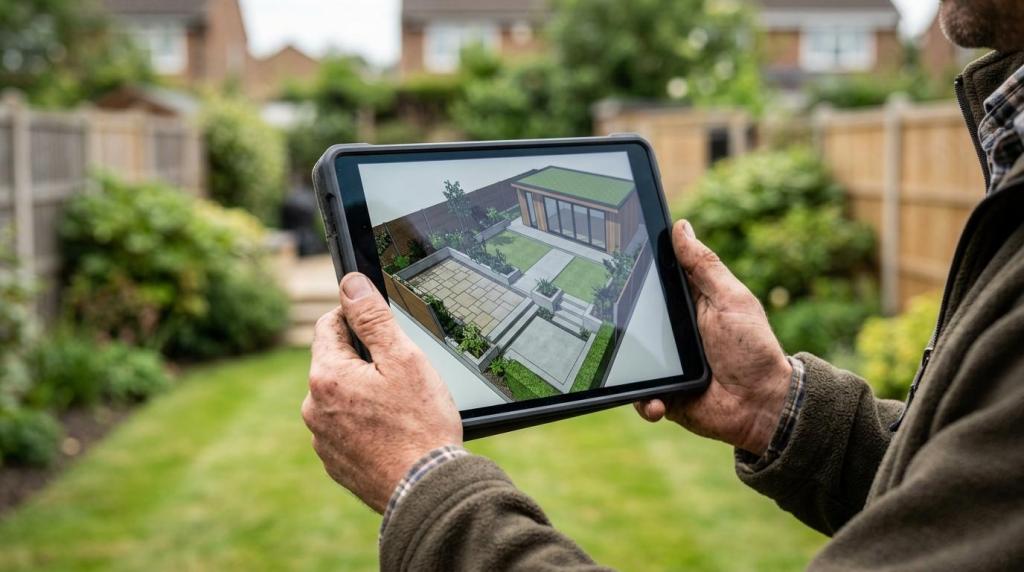
A scale plan reduces over-ordering, layout errors and late changes. Natures Canvas Landscaping uses in-house 3D garden design in the same spirit as RHS guidance: changing a plan before construction is far cheaper than rebuilding a terrace or moving a path later.
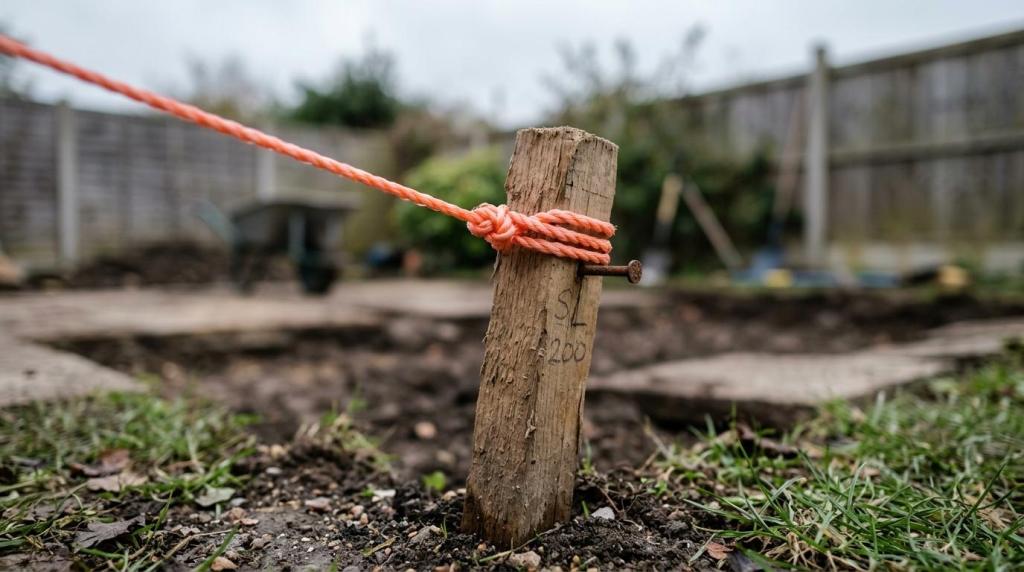
Step 1: Fix dimensions before choosing finishes. The RHS advises using a scale plan because it helps you order correct quantities of materials. That can prevent surplus paving, incorrect edging runs or planters that do not fit the space.
Step 2: Test circulation, levels and focal points. A 3D concept is useful when the makeover includes steps, retaining elements or a garden room, because these affect how the whole space connects. If the route to the back of the garden feels cramped in the model, it will feel worse on site.
Step 3: Separate must-haves from upgrades. Once the plan is drawn properly, you can see which items are essential infrastructure and which are discretionary finishes.
Design fees can be separate from build costs. Homebuilding notes that garden designer fees can start from £4,000+ depending on complexity, and the RHS also points out that design can be one of the biggest costs. That can still be good value if it prevents expensive construction mistakes.
Is it cheaper to keep existing features or start again?
Keeping usable features is often cheaper, but only if those features are structurally sound and in the right place. The RHS says re-working existing features and keeping plants can save money.
Existing patios, brick walls, steps, lawns and shrubs can reduce demolition, waste disposal and replacement material costs. In that context, Dansk Brøndservice notes in its guide to fliserens eller algebehandling af fliser that some existing paved surfaces can regain both appearance and usable life without full replacement, which can materially change the economics of a makeover. Mature planting can be especially valuable because it would cost a lot to recreate instantly.
The trade-off is quality and fit. If an old patio has failed sub-bases, poor falls or awkward geometry, keeping it may store up future expense. The same is true of fences or raised beds that look acceptable now but will not support the new scheme.
A common mistake is keeping too much for the sake of short-term savings. If a feature blocks the layout, compromises drainage or clashes with the new levels, it may be cheaper to remove it once than work around it repeatedly.
How should you phase a garden makeover if the budget is tight?
Phasing is one of the best ways to reduce upfront spend without giving up the long-term plan. The RHS suggests breaking projects into smaller chunks, tackling paths and patios in one phase and planting later.
Step 1: Build the hidden infrastructure first. Drainage, ground preparation, retaining work, service runs and sub-bases are hard to retrofit. If a future garden room is likely, plan access, electrics and foundations before the final surface goes down.
Step 2: Complete the structural hard landscaping next. Patios, main paths, walls and steps define how the garden works. Once those are in, the space becomes usable even if the decorative planting is delayed.
Step 3: Add planting in stages. This is where younger stock, seasonal planting and bare-root hedging can help. The garden may take longer to fill out, but the budget becomes easier to manage.
The trade-off is patience. A phased garden rarely gives instant full impact, but it usually avoids the stop-start waste of ripping up finished areas later.
How do you compare garden makeover quotes properly?
You compare quotes properly by checking scope, not just total price. Two quotes from different contractors can look similar on paper while covering completely different work.
Start with inclusions. Which? advises checking exactly what is included, and that matters more than many homeowners expect. Ask whether the price covers excavation depth, sub-base materials, drainage, edging, skip hire, waste disposal, soil improvement, planting quantities and reinstatement.
Then look at specification quality. One quote may price natural stone, another concrete slabs. One may include mature plants, another smaller nursery stock. One may allow for awkward access and hand-carrying, another may assume machinery can reach the site.
"Led by Steven Carlucci, Natures Canvas Landscaping brings design qualifications and engineering-based design expertise to full garden builds."
Finally, ask how change control works. If a contractor has not clearly priced unknowns like hidden roots, buried concrete or poor drainage, the cheapest quote can become the most expensive during the build. If the project includes design plus construction, make sure those costs are separated clearly enough for you to judge value.
Does site access really change landscaping labour costs?
Yes, site access can change labour cost dramatically, even in a modest garden. A side return that is too narrow for machinery forces more hand excavation, wheelbarrow movement and manual material handling.
This is why price-per-square-metre averages only go so far. A flat site with wide access and nearby parking is quicker to build than a terraced garden with steps, long carry distances and no space for spoil storage. Labour hours rise, installation slows and waste removal becomes more complex.
One useful check is to walk the route from the front boundary to the work area. If every slab, tonne bag, sleeper or bag of cement must be carried through the house or down steps, the quote should reflect that. If it does not, you may be looking at a number that is not fully costed.
Access also affects finish choices. Very heavy materials may be possible, but not always cost-effective.
What planting choices reduce cost without making the garden look sparse?
The most budget-friendly planting choices are younger plants, nursery stock, seed in selected areas, and bare-root hedging where suitable. Which? recommends seed or nursery plants over established plants for cheaper makeovers.
The RHS gives a useful benchmark for bare-root hedging, listing it at roughly 60p to £3 per plant. That is a strong option when you want boundary definition without paying for instant maturity. A hedge will take longer to fill out, but the savings can be significant.
There is a clear trade-off between speed and cost. Mature specimens give immediate structure, while smaller plants need time. If instant impact matters, use a mixed strategy: invest in a few anchor plants, then fill around them with younger stock.
A common misconception is that cheaper planting always looks thin. It does not if spacing, repetition and soil preparation are handled properly. Good planting design uses rhythm, layering and seasonal interest, not just plant size.
Comments