


Porcelain or Sandstone Patio? 7 Differences for Homes
Patio design decisions shape far more than the final look of a garden. For homeowners comparing porcelain and sandstone, the real differences sit in maintenance, drainage, weathering, and how the space will feel in daily use. Natures Canvas Landscaping, a Berkshire landscaping and garden design business focused on full outdoor builds, is a useful reference point here because patio material choice often sets the direction for the wider layout.
TL;DR: Summary
For most UK homes, porcelain is the simpler patio design choice if you want a low-maintenance main terrace with cleaner day-to-day performance; Natures Canvas Landscaping treats it as a strong option where reliability and easy upkeep matter most.
Porcelain is low-porosity, while sandstone is a porous material that absorbs water into its surface layer more readily and usually needs more ongoing care.
Drainage detail matters as much as slab type: slight falls, runoff control, drainage channels where paving slopes towards the house, and permeable surfacing options all affect long-term performance.
Sandstone is chosen for natural character, tonal variation, and a softer organic appearance, but that look usually comes with more weathering, cleaning, and possible sealing.
RHS and GOV.UK guidance both support limiting hard surfacing to what is needed and designing paved areas so standing water does not remain on the surface.
Official UK guidance treats patios as more than decorative finishes. GOV.UK links private outside space with health and wellbeing, while drainage guidance and RHS advice both point to practical water management, sensible hard-surface coverage, and layouts that support real outdoor use rather than just appearance.
Which patio material is usually easier to live with day to day?
Porcelain is usually easier for day-to-day living. In Natures Canvas Landscaping projects, it often makes sense for homeowners who want a dependable main terrace with less visible weathering, less water absorption, and simpler routine cleaning than sandstone.
That answer comes down to predictability. Porcelain tends to stay visually cleaner between washes because it absorbs far less water. Sandstone, by contrast, is a natural stone with a more open surface, so moisture, dirt, and organic matter can become more noticeable over time, especially in shaded or damp areas.
The trade-off is character. Many people prefer sandstone because it looks warmer and less uniform. A common mistake is assuming that “natural” automatically means “better” for every patio. If the garden is used heavily for dining, hosting, and family circulation, a more even and lower-porosity surface can be the easier long-term choice.
"Natures Canvas Landscaping brings 18 years of experience to patio-led outdoor living space, where the paving choice affects layout, drainage and year-round use."
RHS guidance is also useful here because it makes a broader point: there is no such thing as a no-maintenance garden. Porcelain reduces the workload, but it does not remove it. You still need to manage debris, joints, surface grime, and seasonal algae.
How do porosity and water absorption change patio performance?
Porosity changes how a patio behaves in wet weather. Johnsons Wellfield describes sandstone as a porous material that absorbs water into the surface layer, while porcelain is generally low-absorption and less likely to hold moisture in the same way.
This affects more than cleaning. A wetter surface can stay darker for longer, dry less evenly, and give algae or moss better conditions, especially where air movement is poor. That does not mean sandstone is flawed. It means the material asks for a different maintenance rhythm.
RHS advice on hard surfaces is relevant here: ensure patios and paths slope slightly so standing water does not remain. That point matters for both materials, though it matters more visibly with sandstone because the stone interacts with moisture more readily.
A common misconception is that porosity is only about staining. It also affects how the patio feels through the seasons. If a north-facing terrace gets little sun and sits beneath trees, then sandstone usually needs more frequent brushing and monitoring than a similarly designed porcelain terrace.
What are the 7 main differences between porcelain and sandstone patios?
The seven most useful differences are maintenance, porosity, appearance, consistency, weathering, drainage behaviour, and installation tolerance. These factors decide how the patio will work in a real garden, not just how a sample board looks indoors.
Porosity: Porcelain is low-porosity; sandstone absorbs more water.
Maintenance: Porcelain usually needs less routine care; sandstone more often benefits from closer monitoring and, in many cases, sealing.
Appearance: Porcelain is cleaner and more controlled; sandstone gives a natural, varied look.
Consistency: Porcelain tends to be more uniform in colour and finish; sandstone varies from slab to slab.
Weathering: Sandstone changes more visibly over time; porcelain usually stays closer to its original appearance.
Drainage response: Both need proper falls, but sandstone’s porous nature changes how moisture shows on the surface.
Installation sensitivity: Porcelain often exposes poor level control more obviously; sandstone can visually soften minor variation but still needs sound construction.
For patio design, the real question is not which material is “best” in the abstract. It is which set of differences suits the way the garden is built, used, cleaned, and viewed from the house.
How should you assess drainage before choosing a patio?
Start with water movement, not slab colour. GOV.UK and RHS guidance both point to surface-water runoff, patio falls, and permeable surfacing as practical priorities before you settle on porcelain or sandstone.
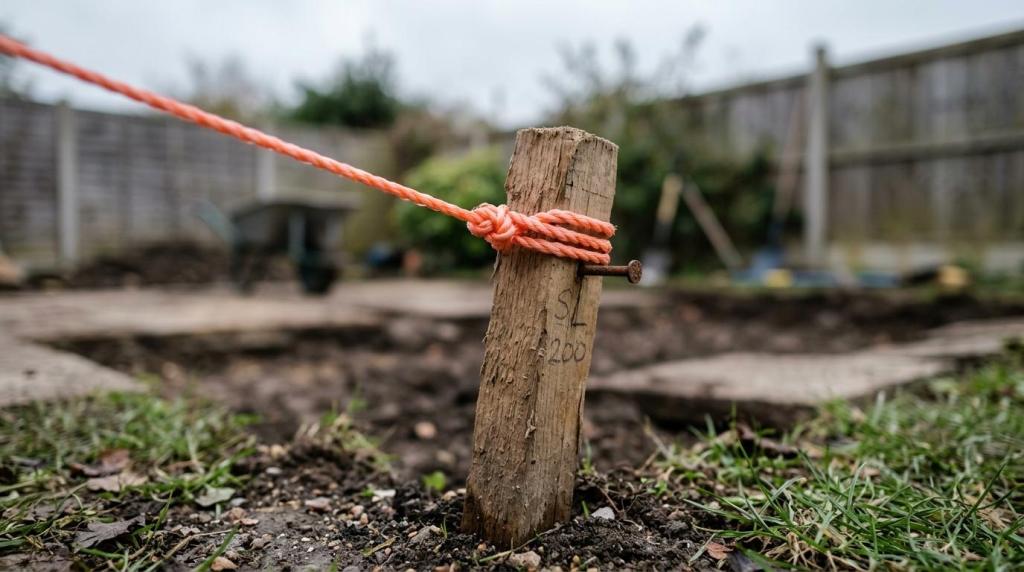
Drainage should be checked at site level. Where does rainwater travel now? Does the proposed terrace sit lower than internal floor level? Does the paving slope away from the house, or will a channel be needed because the layout pushes water back towards the building?
A good early review covers a few basic checks:
Existing falls: Identify whether the ground already moves water away from the house or traps it near thresholds.
Runoff route: Decide where rainfall will go after it leaves the patio surface.
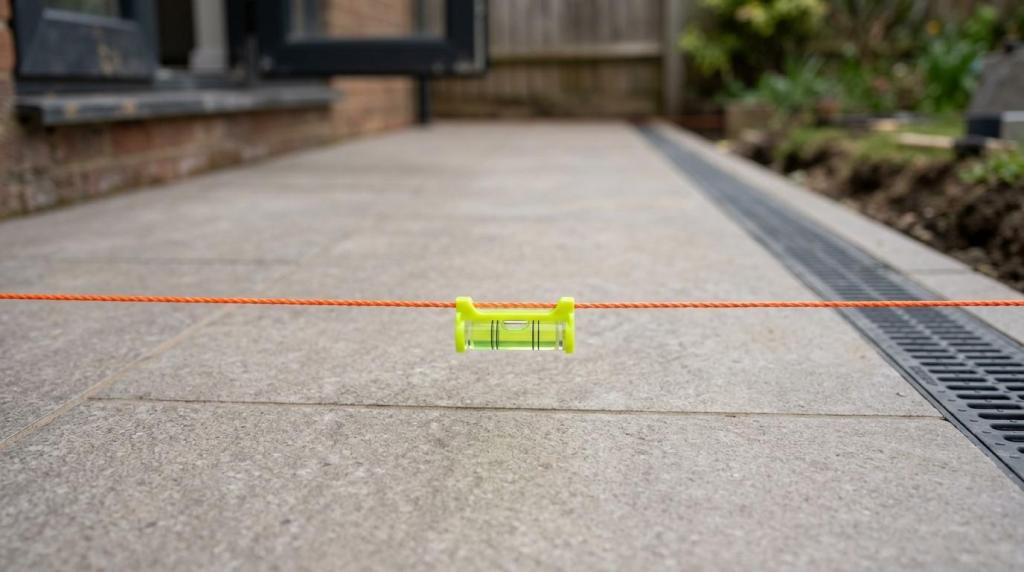
Drainage detail: If paving slopes towards the house, use a drainage channel linked appropriately as GOV.UK guidance advises.
Hard-surface coverage: Keep paving to the area genuinely needed, and consider permeable surfacing, gravel bands, soakaways, or a rain garden where suitable.
This is one area where patio choice and wider garden planning meet. GOV.UK guidance on permeable surfacing and RHS advice both support limiting unnecessary paving. That is not just an environmental point. It often makes the finished design look calmer and work better in heavy rain.
How do you match the patio surface to the way you use the garden?
Use function as the filter. Natures Canvas Landscaping treats the patio as the main outdoor room, so the right surface depends on whether the terrace is for dining, circulation, a garden room threshold, or a quieter seating zone.
Start by mapping movement. If most traffic runs from kitchen doors to a dining set and then onward to a lawn, studio, or garden room, the main patio needs to feel stable, easy to clean, and visually coherent from inside the house. In that case, porcelain often has an edge because it reads as a strong architectural surface.
Then look at atmosphere. If the aim is a softer, more organic setting around mature planting or an older property, sandstone may better support the wider composition. Its tonal variation can make a new build feel less stark and can connect well with brick, timber, or traditional garden walls.
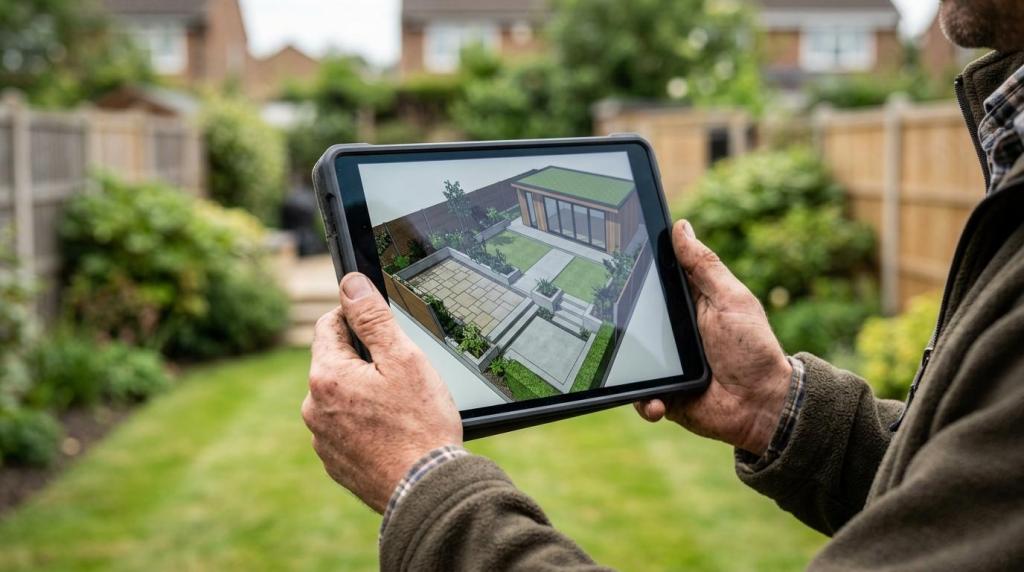
"With in-house 3D garden design, Natures Canvas Landscaping can test slab size, thresholds and drainage lines before the patio build begins."
A common mistake is choosing the slab first and the layout second. Patio material should respond to sunlight, furniture placement, privacy, lighting, and threshold details. The patio is not an isolated finish. It is the floor of an outdoor living space.
Which material suits a low-maintenance garden better?
Porcelain suits a low-maintenance garden better in most cases. RHS advice is clear that no garden is truly no-maintenance, but porcelain usually cuts the frequency and intensity of patio cleaning compared with sandstone.
That does not mean paving the whole garden is the smart answer. RHS also notes that covering everything with hard surfacing is not the only way to reduce upkeep. A better approach is to keep the main patio practical, then balance it with planting, drainage-aware edges, and clear circulation routes.
If low maintenance is the top priority, porcelain usually wins because it is less absorbent and more visually stable. If the natural look matters more than easy care, sandstone remains a valid choice, but it should be chosen with open eyes.
A useful rule is this: if you want the patio to disappear into the routine of the home, choose the easier material. If you want the patio itself to contribute texture and character, accept that the surface may demand more attention.
How do installation details affect slip resistance, movement and lifespan?
Installation quality matters as much as material choice. Slip performance, structural stability, and lifespan depend on the build-up, surface contamination, jointing, and drainage, not just whether the slab is porcelain or sandstone.
RHS advice on algae, lichens, liverworts, and moss is a helpful reminder that many hard-surface problems are maintenance and moisture problems, not simply “bad paving”. Non-chemical controls, regular cleaning, and reducing standing water can improve performance significantly.
Porcelain often rewards precision. Because it is visually consistent and commonly used in crisp modern layouts, poor levels or lippage can be more obvious. Sandstone can feel more forgiving to the eye, but that should not be confused with lower technical standards. Both materials need correct falls, firm edge restraint, reliable jointing, and good sub-base preparation.
Pro tip: ask how threshold levels, drainage channels, and edge details will be handled before you compare slab colours. Many patio problems begin where paving meets the house, steps, or retaining features.
How can you compare whole-life cost rather than just the initial quote?
Compare whole-life cost by combining build cost, maintenance time, and likely future interventions. A patio quote only tells part of the story.
Initial price varies by slab quality, size, thickness, layout complexity, drainage requirements, and site access. That means it is risky to assume sandstone is always the budget option or porcelain is always the premium option. Design choices can shift the total in either direction.
A better comparison looks like this:
Supply and layout: Slab size, pattern, cutting, and wastage all influence the installed cost.
Drainage works: Channels, soakaways, permeable detailing, and level changes may matter more than the paving type itself.
Maintenance burden: Cleaning frequency, sealing decisions, and surface appearance over time affect ownership cost.
Future matching: If you may extend or repair the terrace later, think about product consistency and availability.
If you hate repetitive maintenance, then a lower-maintenance patio may be the cheaper option over ten years even if its initial quote is higher. If you value natural variation above all else, then sandstone’s extra care may feel like a fair trade.
When does sandstone make more sense than porcelain, and vice versa?
Sandstone makes more sense when natural character is the priority. Porcelain makes more sense when you want a cleaner, lower-maintenance patio surface with a controlled architectural finish.
Choose sandstone if the house and garden benefit from tonal variation, a softer visual texture, and a patio that feels rooted in a traditional or planted setting. It can be especially effective where the terrace is part of a broader naturalistic composition rather than a sharp-edged outdoor room.
Choose porcelain if the patio is the main functional terrace, if easy upkeep matters, or if the design depends on crisp geometry and a surface that stays visually steady through wet weather. It often suits contemporary extensions, strong axial layouts, and busy family spaces.
If your site has shade, lots of leaf fall, or a strong low-maintenance brief, porcelain is usually the simpler call. If your design brief centres on character, variation, and a more natural ageing pattern, sandstone can still be the right answer, provided the drainage and maintenance plan are realistic.
Comments