


Why Drainage Matters in Every Garden Build Project
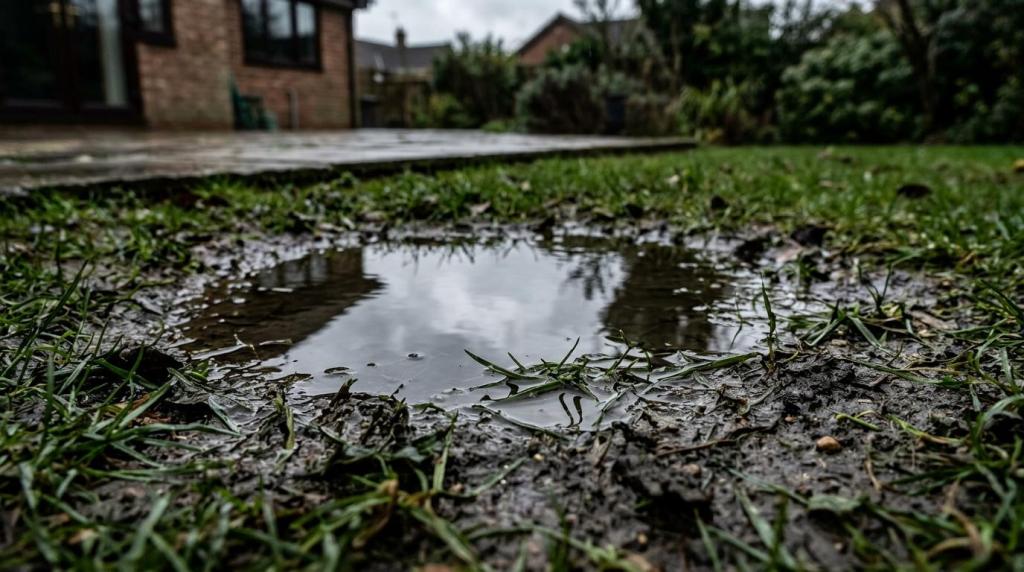
A garden can look exceptional on the day it is finished and still fail quietly over the months that follow. Paving begins to hold water, borders stay cold and saturated, steps become slippery, and lawn edges soften into mud. In many cases, the problem is not the stone, the planting, or the layout. It is drainage that was treated too late.
That is why drainage deserves a place near the start of every garden build project, not as a technical extra added during construction. In UK conditions, where heavy rain, clay soils, and compacted ground are common, water movement shapes the success of almost every outdoor space. It affects how paving performs, how foundations behave, and whether a garden room sits within a dry, stable setting.
UK guidance supports this early approach. GOV.UK guidance for paved garden areas points towards permeable surfaces, soakaways, and rain gardens as practical ways to reduce runoff. RHS guidance also makes the point that wet soils sometimes need more than a simple fix. In some gardens, the best answer is not just more drainage infrastructure, but a layout that works with the site.
Why early garden drainage planning matters in a full garden build
A full garden build is a connected system. Levels, paving falls, retaining walls, planting beds, steps, lighting routes, and garden room bases all depend on what water does when the rain arrives. If surface water has no clear route away, even excellent materials can underperform.
This is especially true in hard landscaping. Porcelain patios, driveways, pathways, setts, and terraces need correct sub-base preparation and accurate falls. Water must either drain through a permeable surface or move across the surface towards a suitable outlet. If neither has been planned well, the result is rarely subtle. Pooling appears quickly, jointing suffers, and the visual quality of the build starts to slip.
Drainage also affects the shape of the design itself. A garden with a high water table or persistently wet soils may not suit the same layout as a free-draining plot. Raised beds, revised paving areas, changes in level, and different planting zones can all form part of the answer. That is one reason in-house 3D garden design can be so useful. It allows drainage ideas to be considered as part of the whole outdoor space, rather than as a last-minute correction.
A strong design and build process tends to review:
Existing levels
Soil type
Water flow after rain
Paved surface area
Threshold levels near the house
Likely position of any garden room or structure
Poor garden drainage can damage hard landscaping and outdoor living spaces
Poor drainage is often described as an annoyance. In reality, it can affect the long-term performance of the whole build.
Where paving remains wet for too long, algae and staining become more likely. Where the sub-base is repeatedly saturated, movement can follow. Retaining features and edging details can also suffer if surrounding ground stays waterlogged. Even when the structure remains sound, the garden may feel unusable during large parts of the year.
Garden rooms add another layer to this. A garden room is not just a standalone structure placed at the end of a garden. It sits within a wider environment that needs stable levels, reliable access, and dry approaches. If the path to it floods, or if water gathers around its base, the experience of using that space changes at once.
Some of the most common warning signs are easy to spot:
Standing water after rainfall
Mud collecting beside patios and paths
Water tracking towards the house
Slippery paving that stays wet for days
Borders that feel permanently saturated
UK garden drainage solutions that support better runoff control
There is no single drainage solution that suits every site. The right approach depends on soil conditions, existing levels, available outfall points, and how much hard landscaping the design includes. Still, several methods appear regularly in well-planned UK garden builds.
GOV.UK guidance supports the use of permeable surfaces, soakaways, and rain gardens to reduce rainfall runoff from paved areas. That matters because many modern outdoor spaces contain significant paved zones. Without thoughtful runoff control, a stylish design can place unnecessary pressure on drainage infrastructure and create avoidable problems on site.
The table below shows how several common approaches work within a garden build project.
Drainage method | Best used for | Key benefit | Design note |
|---|---|---|---|
Permeable surfaces | Patios, paths, driveways, some courtyards | Allows water to pass through the surface or sub-layers | Needs the right build-up beneath, not just a different top material |
Soakaways | Sites with suitable ground conditions and space | Stores water and lets it disperse into the soil | Must only be used where water has somewhere appropriate to go |
Rain gardens | Areas designed to receive runoff from paving | Slows and holds water in a planted feature | Works well when drainage is visible and built into the layout |
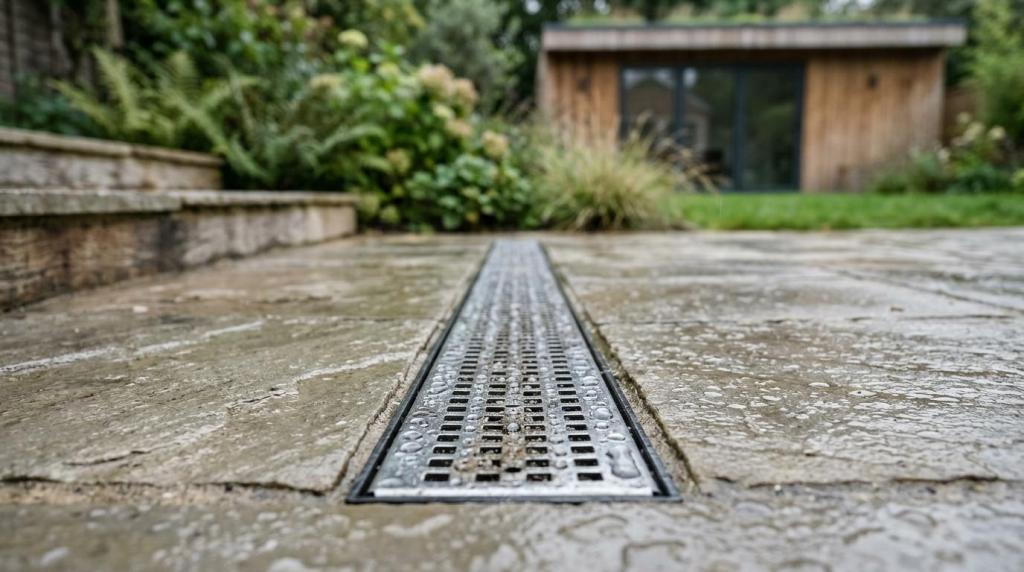
Linear drains and channels | Thresholds, patio edges, narrow runoff routes | Captures surface water neatly | Best when linked to a wider drainage strategy |
Raised beds and revised levels | Wet soils, awkward plots, high water table | Reduces pressure on saturated ground | Often a design-led answer rather than a purely technical one |
Permeable paving is often discussed as if it were only relevant to driveways, yet the principle can support many garden layouts. Where the site allows, permeable construction helps reduce surface water runoff and keeps water closer to where it falls. That can be a sensible fit for contemporary designs with generous paved areas.
Rain gardens are also gaining attention for good reason. Rather than forcing all water to disappear as quickly as possible, they create a planted area designed to receive and slow runoff. In the right scheme, they can become one of the most attractive parts of the build.
Garden drainage design should respond to soil, levels, and water table conditions
Wet ground is not always a sign of poor workmanship or failed drainage. Sometimes it is the natural condition of the site. Clay soils drain slowly. Low points collect runoff. A high water table can keep the ground saturated for long periods, especially in winter.
RHS guidance makes a useful distinction here. In some gardens, artificial drainage can improve growing conditions and usability. In others, the better route is to work with the site by choosing suitable design changes and plants adapted to wet conditions. That matters because not every plot should be treated as if it can behave like a dry, free-draining terrace.
This is where drainage planning becomes more strategic. Rather than asking only, “How do we get rid of water?”, a stronger question is, “How should this garden be shaped because of water?” That shift often leads to better outcomes.
A design team should assess several points before ground is broken:
Soil profile: clay, loam, made ground, or mixed conditions
Existing falls: where water currently moves, stalls, or gathers
Threshold sensitivity: doors, air bricks, and low points close to the house
Surface balance: how much of the garden will be paved compared with planted
Structure impact: how drainage will affect retaining walls, steps, and hard landscaping
Drainage in garden construction is about more than pipes underground
When people hear the word drainage, they often picture pipes hidden below the surface. Those may form part of the build, but the visible construction details matter just as much.
Falls in paving are a basic example. A patio should not appear obviously sloped, yet it still needs enough fall to move water away effectively. The same applies to pathways, side returns, and transitional spaces between the house and garden. Tiny errors at this stage can create repeated issues later.
Sub-base preparation is equally important. Hard landscaping only performs well when the groundwork is right. A beautifully laid surface on poorly prepared ground may look sharp at handover and then struggle through its first wet season. Proper excavation depths, correct compaction, and the right specification under the finished surface all support drainage performance.
This is one reason a full design and build service has real value. When one team considers concept design, groundworks, and final construction together, drainage is easier to integrate into the project rather than patched into it.
How garden rooms depend on proper drainage and site preparation
Garden rooms have changed what many clients expect from their outdoor space. That is one reason site preparation matters so much, and Havemekka notes in its review of fundament, underlag og god ventilation for havehuse og shelters that moisture around the base can shorten the life of both the structure and the space around it. They are now used as offices, studios, gyms, guest accommodation, and year-round retreats. That level of use places more pressure on the surrounding landscape to perform well in all seasons.
Access routes need to stay dry. Patio areas outside the garden room should shed water correctly. The base and surrounding ground must be stable. Services may need to run below ground, and those routes need to sit within a build that respects water movement rather than ignores it.
A well-designed setting for a garden room often includes:
Dry approach: paths and thresholds that do not hold water
Stable base zone: carefully prepared ground around the structure
Managed runoff: drainage routes planned into paving and surrounding levels
Integrated design: the garden room treated as part of the whole scheme, not an isolated add-on
When a wet garden needs layout changes rather than heavier drainage
Sometimes the best drainage decision is to stop fighting the site.
If a garden naturally holds moisture in one lower section, that space may be better suited to a rain garden, a wet-soil planting area, or a visual feature that accepts periodic saturation. If a lawn struggles year after year because of shade and wet ground, replacing part of it with paving, raised planters, or a different use zone can be the wiser move.
This approach is not about compromise in the negative sense. It is about designing a space that performs well and still feels refined. In many high-quality builds, the most successful result comes from blending drainage engineering with intelligent spatial design.
That is especially true in compact plots, sloping gardens, and properties where the relationship between the house and garden needs careful handling. A stronger layout can reduce reliance on reactive drainage and create a more usable outdoor space across the year.
Questions worth asking before a garden build starts
Drainage becomes easier to solve when the right questions are raised early, before materials are chosen and construction begins.
If a homeowner is planning a new patio, a full garden transformation, or a garden room, these questions help set the tone for better decisions:
Where does water currently go during heavy rain?
Will new paving increase runoff into other parts of the garden?
Is the soil naturally free-draining or often saturated?
Could permeable surfaces or a rain garden improve the design?
Do levels near the house need special care?
Is the proposed layout working with the site, or against it?
For Berkshire gardens and similar UK settings, that early review can save time, cost, and disruption later. It also opens up better design choices. A patio can drain beautifully without looking engineered. A garden room can sit within a dry, polished setting. A full garden build can feel elegant on the surface because the groundwork has been treated with real care underneath.
Drainage rarely receives the same attention as paving samples, planting palettes, or feature walls. Yet it supports all of them. When it is considered from the first design stages, the result is not only a garden that looks impressive on completion, but one that continues to work well through wet winters, summer storms, and everyday use.

Comments